
RSP’s Tech Blueprint: How Nepal Plans to Become a Global Technology Hub
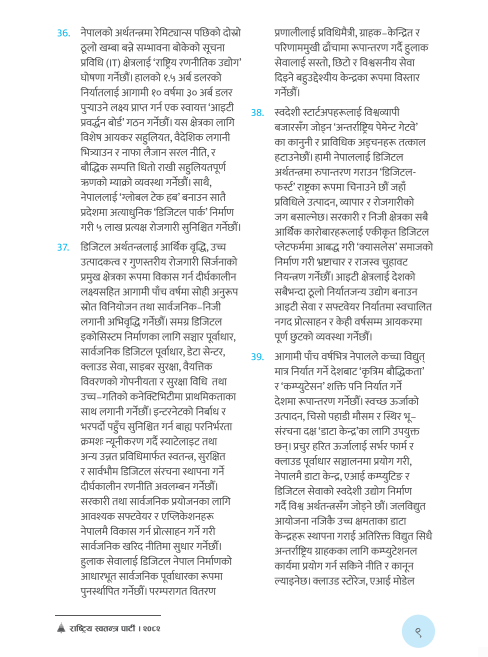
Butwal — As Nepal positions itself for a digital future, the Rastriya Swatantra Party (RSP) has unveiled one of the most technology-focused political blueprints seen so far. In its election manifesto for the House of Representatives Election 2082, the party outlines a long-term vision to transform Nepal into a Global Tech Hub, backed by digital governance reforms, large-scale IT exports, cybersecurity infrastructure, and emerging technologies.
The manifesto aligns closely with Nepal Government’s declaration of 2024–2034 as the “IT Decade”, proposing structural reforms that aim to modernize public services, create employment, and position Nepal as a competitive player in the global digital economy.
Digital Governance: Ending Paper-Based Bureaucracy
At the core of RSP’s proposal is a shift toward faceless, fully digital governance. The party plans to use the National Identity Card as the foundation for an integrated digital database, allowing citizens to access government services without physical visits.
Services such as:
- Birth and death registration
- Social security distribution
- Driving licenses
- Business registration
- Tax and licensing services
would be delivered through secure digital platforms, replacing the long-standing paper-based (ढड्डा) system. Digital signatures, automated verification, and time-bound service delivery frameworks are emphasized to reduce corruption and inefficiency.
$30 Billion IT Export Vision During Nepal’s IT Decade
RSP has set an ambitious target of USD 30 billion in IT and software service exports within 10 years. To achieve this, the party proposes establishing an autonomous IT Promotion Board responsible for policy execution, global partnerships, and export facilitation.
Key economic measures include:
- Special income tax incentives for IT companies
- Simplified rules for foreign investment and profit repatriation
- Access to concessional loans using intellectual property as collateral
- Dedicated macro-level financing mechanisms for tech startups
According to the manifesto, these policies could help Nepal compete with regional IT hubs while retaining domestic talent.
Digital Parks and Half a Million Tech Jobs
To support infrastructure growth, RSP plans to build advanced Digital Parks across all seven provinces. These hubs would host:
- IT service companies
- Software development firms
- Research labs
- Startup incubators
The party claims this initiative could create over 500,000 direct jobs, reducing youth migration and strengthening Nepal’s domestic tech ecosystem.

Green Data Centers: Nepal as the World’s Green Server Room
One of the manifesto’s standout proposals is the development of Green Data Centers, leveraging Nepal’s:
- Abundant hydropower
- Naturally cool Himalayan climate
RSP envisions branding Nepal as the “world’s greenest server room”, offering secure, low-carbon data hosting services to international companies. This strategy aims to attract foreign tech firms while aligning with global sustainability goals.
AI, Blockchain, and Cloud in Core Sectors
The manifesto emphasizes adoption of Fourth Industrial Revolution technologies, including:
- Artificial Intelligence (AI)
- Blockchain
- Cloud Computing
These technologies would be integrated into industry, agriculture, healthcare, and education, with AI-based research centers established in every province. The plan also includes nationwide e-libraries and expanded telemedicine services, improving digital access beyond urban centers.
Online Voting for Migrant Workers
Recognizing Nepal’s large migrant workforce, RSP commits to introducing secure online voting systems for Nepalis working abroad. If implemented, this would mark a significant shift in electoral participation through digital identity verification and cybersecurity safeguards.
Smart Cities and Nationwide Broadband
Urban development is another focus area. Selected municipalities would be gradually transformed into Smart Cities, supported by:
- High-speed broadband internet
- Digital public services
- Smart infrastructure planning
The manifesto pledges nationwide broadband expansion to ensure digital inclusion across rural and remote areas.
Cybersecurity and Data Protection Commitments
With rising digital threats, RSP proposes establishing a 24/7 National Cyber Security Center to monitor, prevent, and respond to cyber incidents. The party also commits to drafting strict data protection and privacy laws, ensuring citizens’ personal data remains secure in an increasingly digital state.
A Tech-Centric Political Vision
While the feasibility of these commitments will depend on execution, funding, and political stability, RSP’s manifesto signals a clear shift: technology is no longer a side policy it is central to national development.
For Nepal’s tech community, startups, cybersecurity professionals, and digital entrepreneurs, the document presents both opportunity and responsibility in shaping the country’s digital future.